

Prefer to Listen? Press Play Below
For your convenience, this blogpost is also available as an audio version. Simply click the play button to listen. (AI-voiced narration. Duration: ~ 5.30 min)
Author: Matej Fatur & prof. dr. Luka Juvančič | University of Ljubljana, Biotechnical faculty
What if we could understand the environmental impact of a bio-based product as clearly as we understand what it is made of? That is one of the challenges ARGONAUT is addressing. The project’s central objective is to develop a self-learning AI tool for the estimation of environmental assessment along the cradle-to-grave value chain: a smarter and more transparent way to assess circular bio-based products, so that sustainability is not merely claimed but properly supported by data.
Bio-based products are often seen as part of the answer to climate and resource challenges, but their true environmental value is not always easy to demonstrate. The reason is simple: these products are often based on complex value chains, where feedstocks vary, processes create multiple outputs, and the final fate of the material may be difficult to predict. In such systems, environmental assessment becomes a demanding task.
Bio-based products present a challenge for environmental assessment because they are not automatically more sustainable simply because they are derived from biological material. Their environmental performance depends on many factors, such as knowing where the biomass comes from, how it is harvested and processed, whether side streams are reused through a cascade approach, and what happens at the end of its life cycle. Even small changes in these assumptions can lead to very different conclusions. This is why ARGONAUT is grounded in a robust methodological approach based on Life Cycle Assessment (LCA), backed by ISO 14040 and ISO 14044, a standard for examining environmental impacts across the full life cycle of a product. At the same time, the project recognises that circular bio-based systems introduce additional complexity, including data gaps, biological variability, multifunctionality, and challenges in comparison with fossil-based baselines.
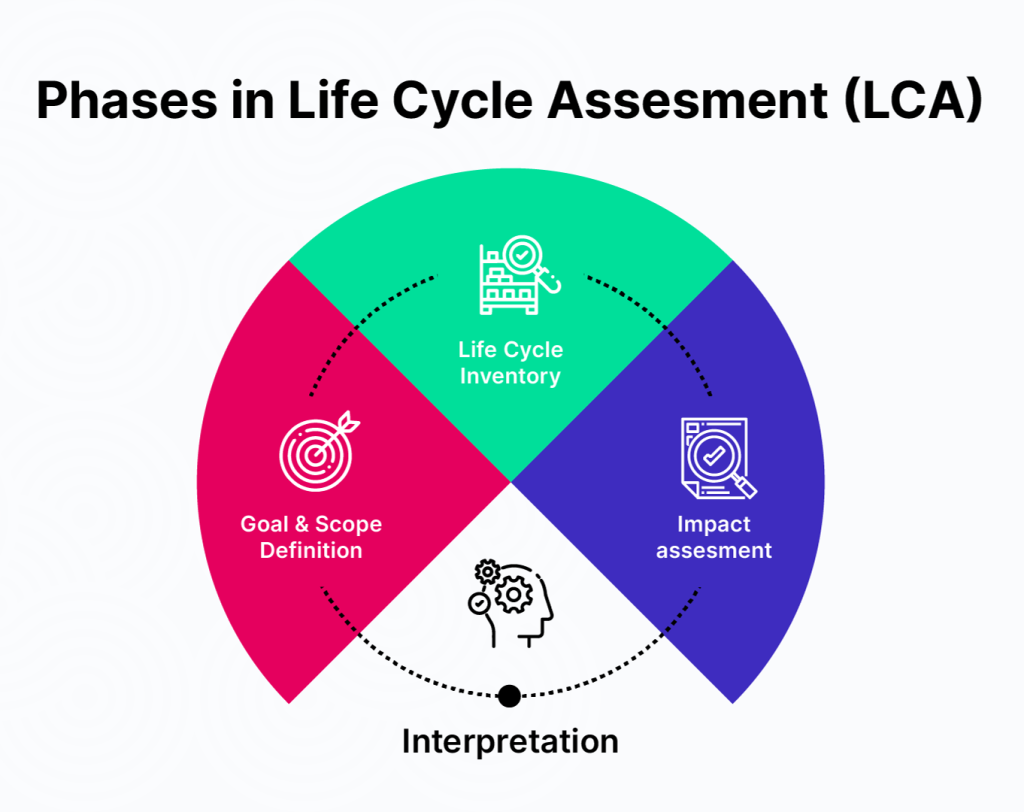
In this case, artificial intelligence supports the environmental assessment process and is not being used to replace experts. Instead, it is being introduced as an additional tool for aspects of environmental assessment that are slow and data-intensive. These include desk research, gathering primary and secondary data, organising inventory data, filling in missing information, detecting hotspots, and exploring different scenarios across a product life cycle. Here, AI can make a real difference. It can help analysts work faster and more consistently, especially when the available information is fragmented or incomplete. However, the project is also clear that AI has limits; key decisions, such as how to define the system boundary or how to interpret results, still require human expertise and judgement.
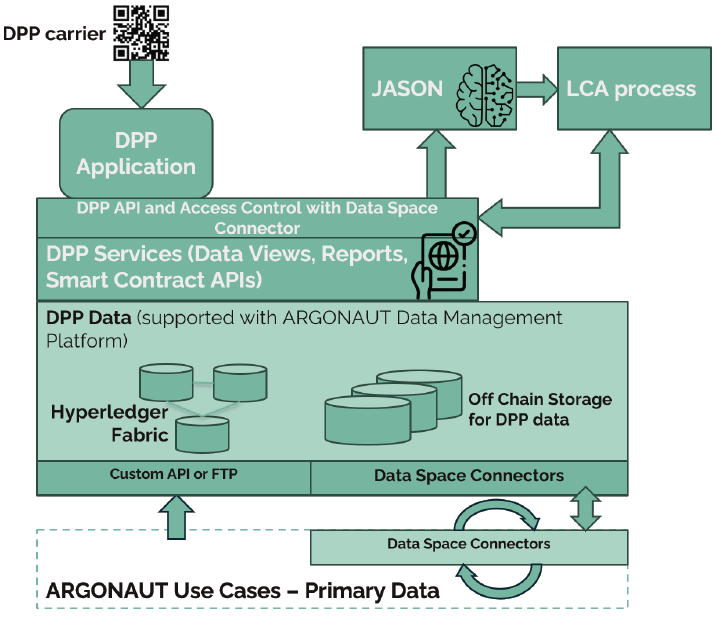
One of the most interesting ideas in ARGONAUT is to build trust in sustainability information through the use of a Digital Product Passport (DPP). In simple terms, this is a structured way to store and share important information about a product, including its environmental footprint, the method used to assess it, and the data behind the results, using a blockchain layer to ensure robust provenance, controlled disclosure, and cross-organisation interoperability. This matters because sustainability information is often scattered across reports, spreadsheets, and internal documents. A product passport can bring that information together and make it easier to trace, verify, and communicate.
The project is being tested against six real-world bio-based value chains (use cases), which helps show whether the approach can work across different sectors and product types. ARGONAUT’s approach is particularly useful because it does more than create a record for experts; it also enables clearer communication with consumers, auditors, authorities, and business partners. By combining Life Cycle Assessment, Artificial Intelligence, and Digital Product Passports, the project is helping build a bridge between biomass and reliable data in a field where evidence matters.

FREQUENTLY ASKED QUESTIONS | What People Often Ask
- What are the main drivers for the development of bio-based value chains?
The two most important drivers are the potential for feedstock diversification (moving away from fossil resources) and the ability to introduce new functionalities in products.
Find out more about development of the development of bio-based value chains
- What is the value chain of a product?
The Value Chain is a model, originally proposed by Michael Porter, that describes the full range of activities required to bring a product or service from conception through the different phases of production, delivery to final consumers, and final disposal/recycling.
Find out more about the value chain of a product
- What are examples of bio-based products?
Bio-based products are wholly or partly derived from renewable biological resources (biomass), such as plants, algae, animals, or various types of organic waste, and are generally an alternative to petroleum-derived products. Examples include:
Find out more about the bio-based products
